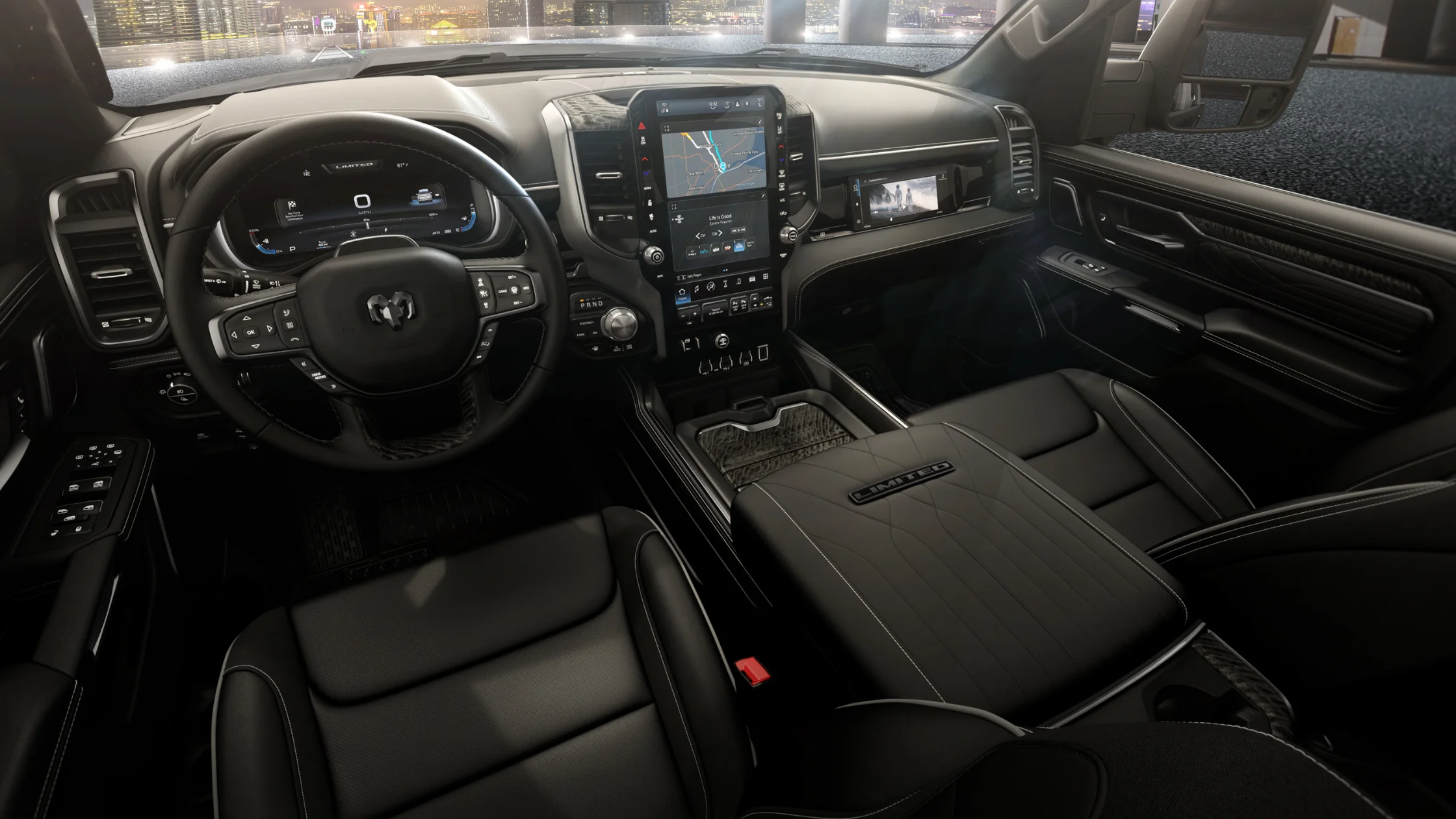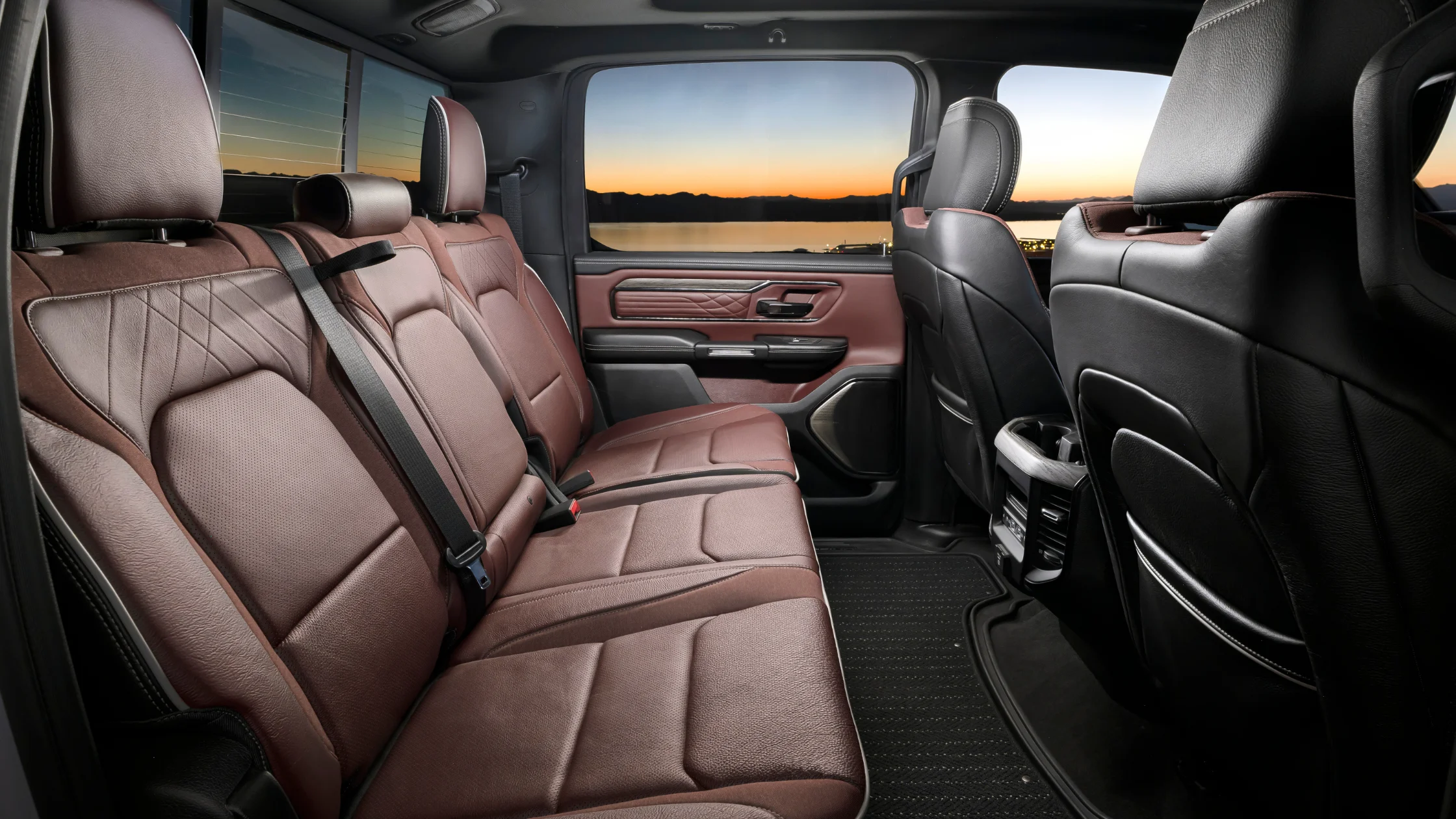
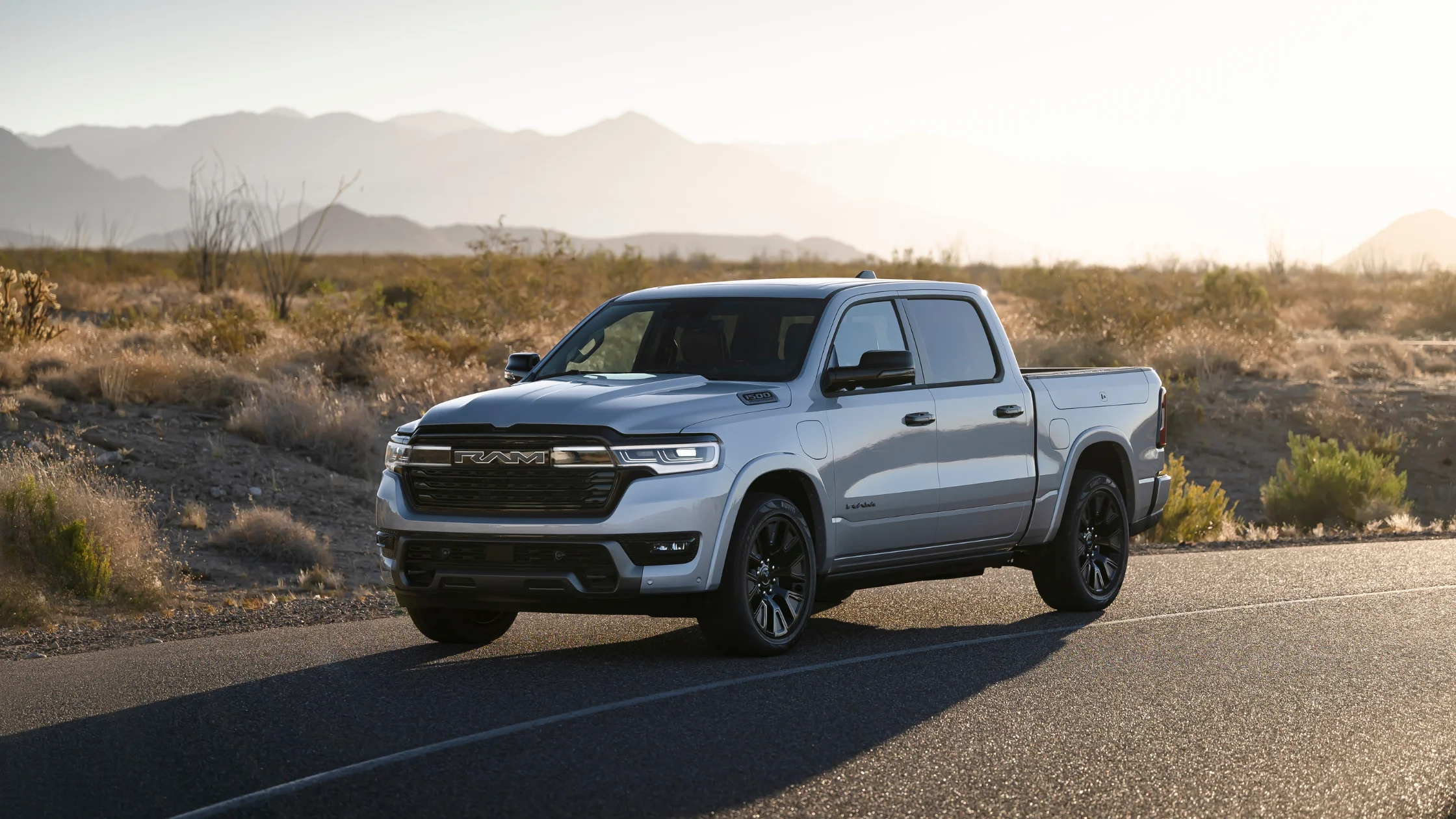
The 2026 Ram 1500 REV introduces a range-extended electric truck platform designed to support towing capability, payload performance, charging flexibility, and advanced digital integration. The model combines an electric propulsion system with a range-extending generator configuration that supports longer driving capability compared to conventional battery-electric layouts. Ram developed the truck to maintain the utility standards expected from a full-size pickup while integrating high-output electric performance and advanced driver assistance technologies.
The truck uses a liquid-cooled 92-kilowatt-hour battery pack paired with a 130-kilowatt onboard generator. A 3.6-liter Pentastar® V6 engine powers the generator system. The engine does not directly drive the wheels. Instead, it generates mechanical power that the onboard system converts into electricity to support the battery and propulsion system. This configuration allows the truck to continue supplying electrical power during extended operation and higher-demand driving situations.
The 2026 Ram 1500 REV also integrates multiple charging methods, regenerative braking technology, digital information systems, and configurable storage solutions. Interior and exterior features focus on functionality, accessibility, and operational efficiency while maintaining the structural characteristics expected from a full-size Ram pickup truck.
High-Output Electric Performance and Power Delivery
The 2026 Ram 1500 REV produces up to 647 horsepower and 610 lb-ft of torque. The electric propulsion system provides immediate torque delivery for acceleration, towing response, and load management. Ram estimates a 0 to 60 mph acceleration time of approximately 4.5 seconds.
Electric motors provide consistent power delivery without relying on traditional transmission shift patterns. The system responds directly to throttle input, which supports smoother acceleration and improved responsiveness during towing or merging conditions. The onboard range-extending generator supplements electrical supply during operation and assists in maintaining system output during extended driving periods.
The truck's propulsion layout supports both efficiency and utility. The electric motors handle propulsion duties while the generator system helps maintain usable electrical energy under increased load demands. This configuration allows the vehicle to support truck-oriented capability without relying entirely on external charging infrastructure during longer operation cycles.
Towing Capacity and Payload Specifications
The 2026 Ram 1500 REV is engineered to support heavy-duty truck functionality. When properly equipped, the truck offers a maximum towing capacity of up to 14,000 pounds and a maximum payload capacity of up to 2,625 pounds.
These figures position the truck competitively within the full-size pickup segment. The towing system is designed to support trailers, equipment haulers, utility loads, and recreational applications. Payload capability supports cargo transport requirements associated with construction materials, tools, work equipment, and additional heavy loads placed within the truck bed.
Electric torque delivery contributes to towing stability and launch response by supplying immediate low-speed pulling force. The truck's structural design and power management systems work together to maintain operational consistency during demanding towing conditions.
Advanced Charging Architecture and Energy Management
The 2026 Ram 1500 REV supports Level 1, Level 2, and Level 3 charging compatibility. The truck can charge through standard household outlets, dedicated residential charging equipment, and public DC fast-charging stations.
The Level 3 DC fast-charging system operates on a 400-volt architecture with charging capability up to 145 kilowatts. Under supported charging conditions, the truck can add approximately 50 miles of all-electric driving range in around 10 minutes.
The charging system is designed to reduce charging downtime during extended travel. Public charging compatibility also expands operational flexibility for drivers traveling outside standard commuting areas. The integrated charging platform supports route planning and energy monitoring through onboard digital systems.
The truck also supports the Free2Move Charge app. This application allows drivers to locate charging stations, activate charging sessions, and process payments through a centralized interface. The system assists drivers with charge management and station accessibility while supporting broader charging network integration.