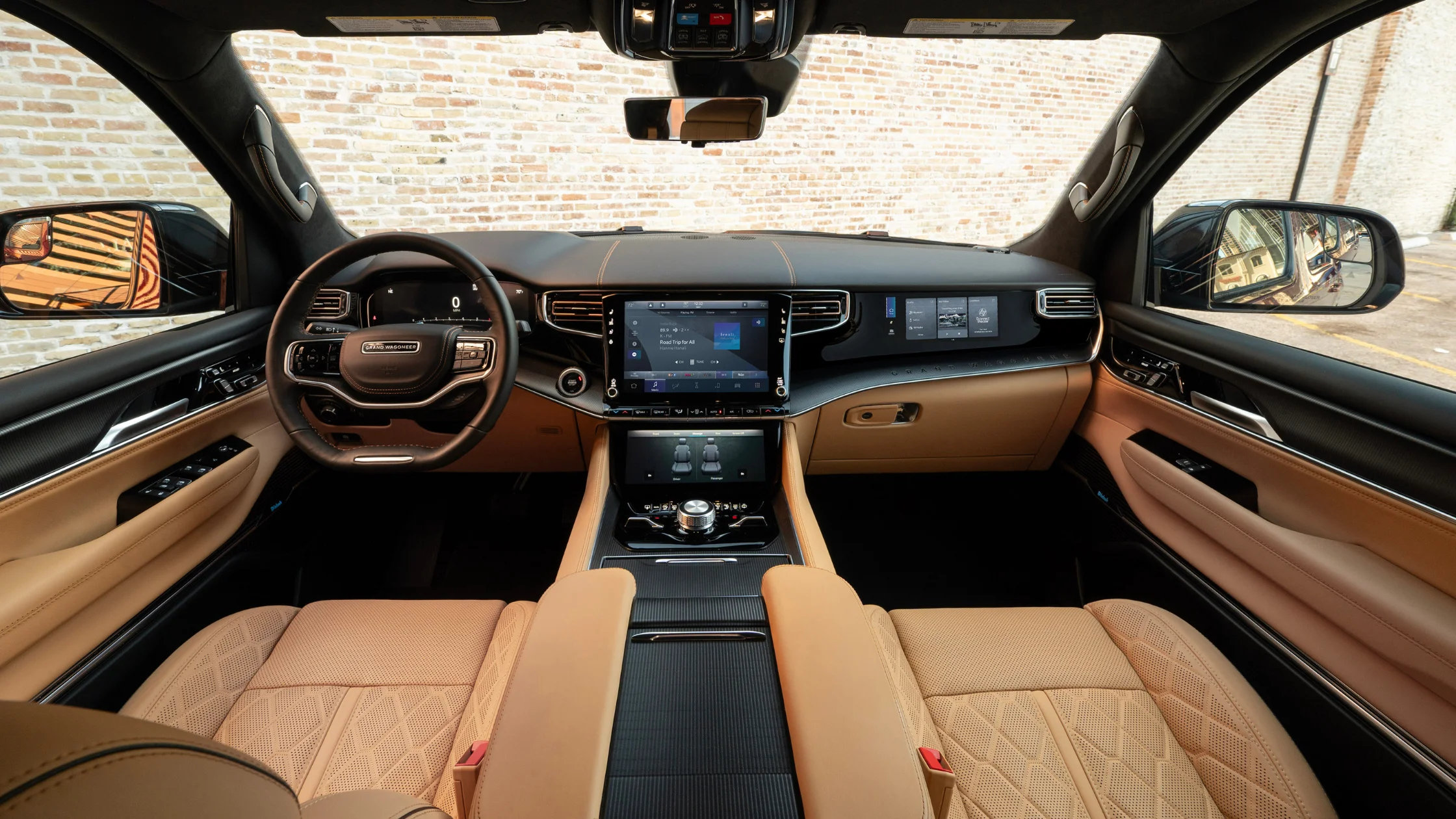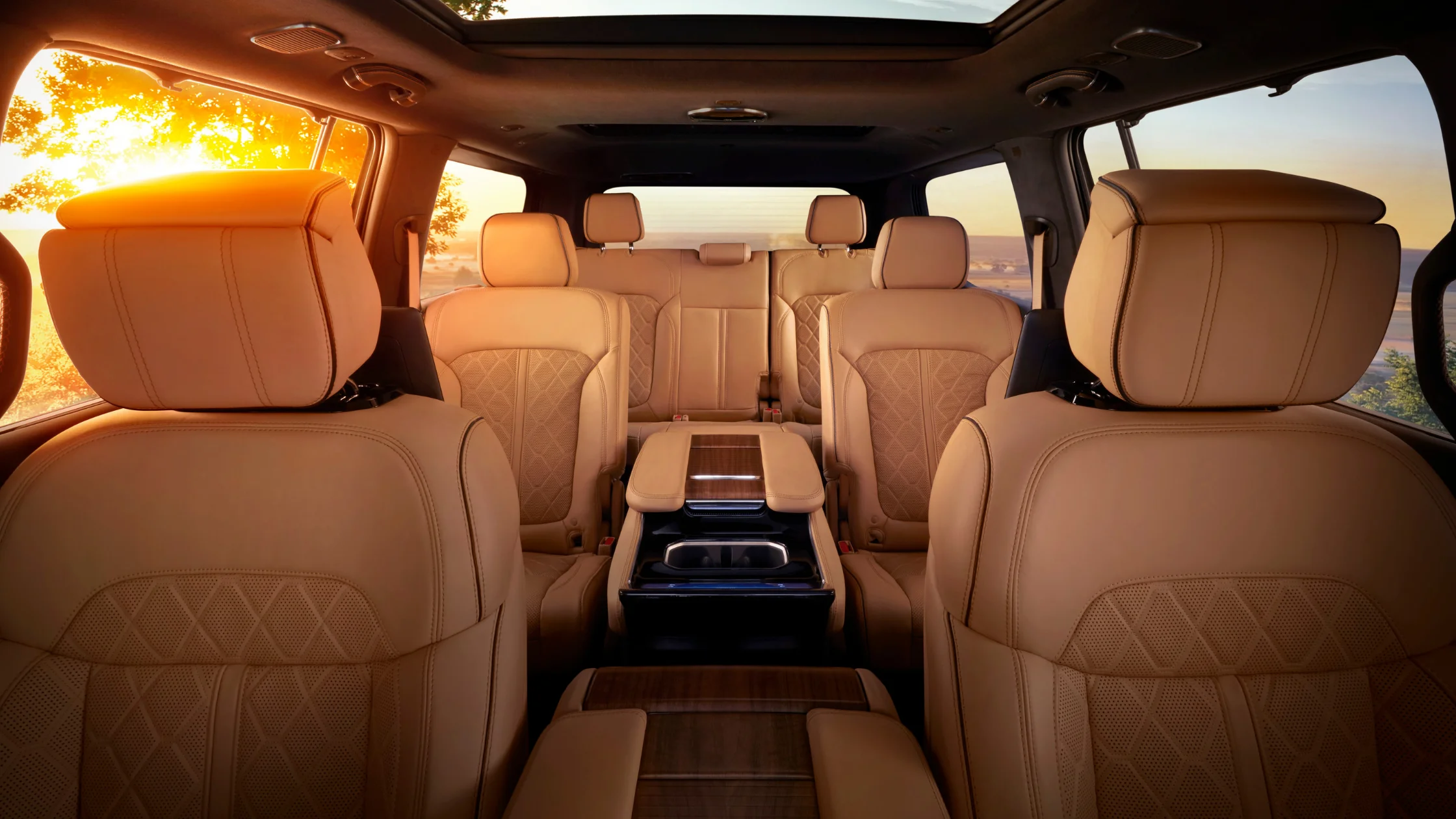
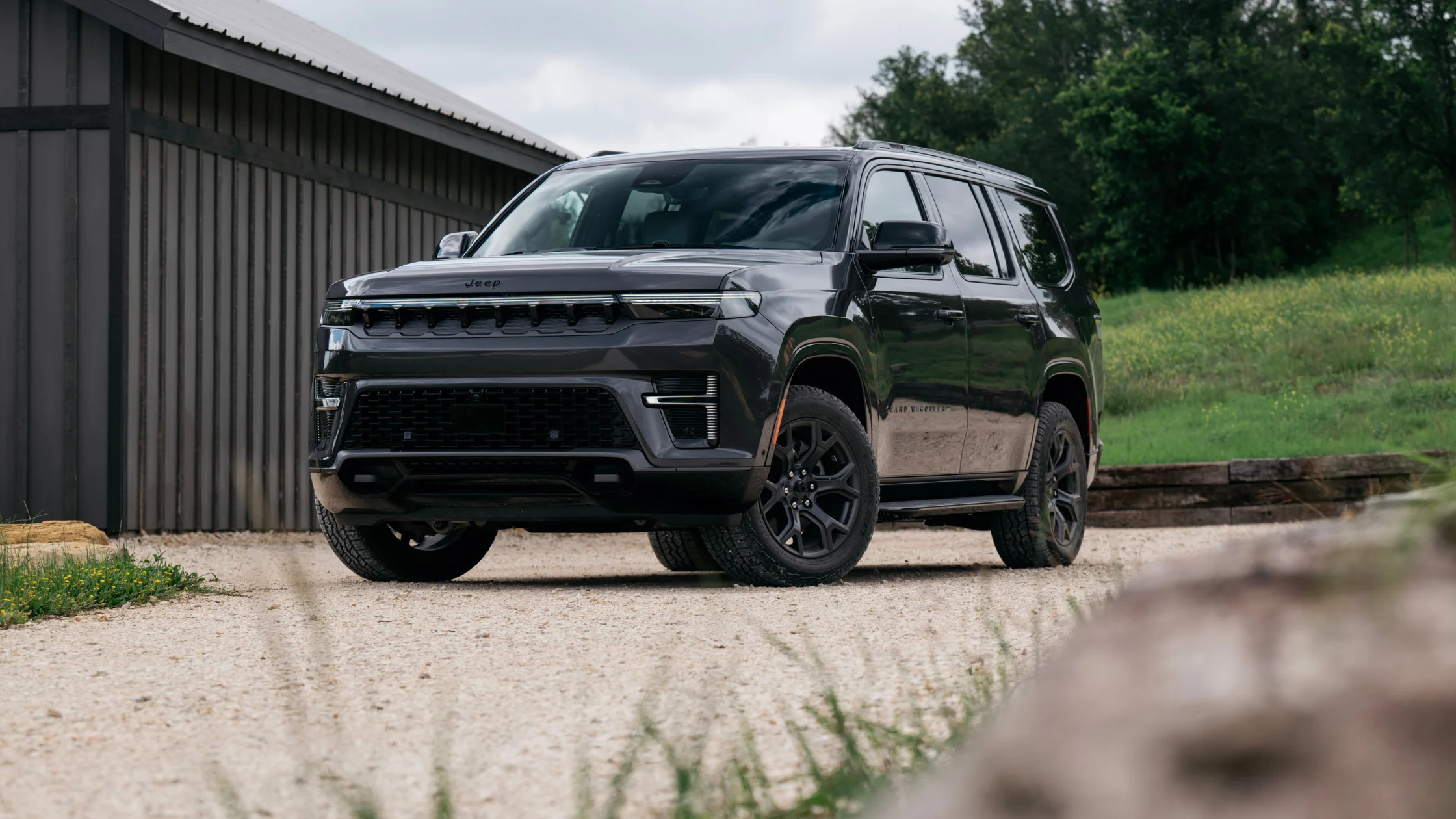
The 2026 Jeep® Grand Wagoneer enters the new model year with updated Jeep® badging, revised exterior styling details, and a continued focus on full-size SUV capability, passenger accommodation, towing strength, and integrated vehicle technology. Jeep® confirmed that the 2026 Jeep® Grand Wagoneer will arrive with a new attitude while retaining the large-scale utility and technical characteristics associated with the model line. The vehicle continues to occupy the premium full-size SUV segment with a configuration designed for long-distance travel, cargo management, passenger transport, and towing applications.
The 2026 Jeep® Grand Wagoneer maintains body-on-frame construction and continues to support multiple drivetrain and suspension technologies intended to improve ride stability, traction control, and towing performance. Jeep® also continues offering standard-length and long-wheelbase configurations to support different passenger and cargo requirements.
Hurricane Twin-Turbo Engine Supports High-Output Performance
The 2026 Jeep® Grand Wagoneer uses a Hurricane Twin-Turbo inline-six engine rated at up to 420 horsepower and 468 lb-ft of torque. The engine configuration focuses on balancing power output, acceleration capability, towing support, and highway efficiency within a large SUV platform. The twin-turbocharged setup allows the engine to maintain strong low-end torque while supporting consistent power delivery during passing maneuvers, uphill driving, and trailer hauling.
The 2026 Jeep® Grand Wagoneer pairs the Hurricane engine with an automatic transmission calibrated for full-size SUV operation. The transmission programming assists with controlled gear changes under heavy loads and maintains smoother operation during highway cruising. The available drivetrain systems also support traction management across paved roads, loose surfaces, steep inclines, and low-grip conditions.
Jeep® engineers designed the 2026 Jeep® Grand Wagoneer powertrain to support a maximum towing capacity of up to 10,000 pounds when properly equipped. This rating allows the SUV to handle large trailers, boats, enclosed cargo haulers, and recreational equipment. The towing system integrates with the vehicle's structural platform, suspension calibration, and available trailer-management technologies to maintain stability during acceleration, braking, and lane transitions.
Quadra-Drive® II Enhances Four-Wheel Traction Management
The available Quadra-Drive® II four-wheel-drive system remains one of the defining technical features of the 2026 Jeep® Grand Wagoneer. The system uses an active transfer case combined with a rear electronic limited-slip differential to distribute torque across the drivetrain according to road and traction conditions. This configuration improves traction management during rain, loose gravel, uneven surfaces, and snow-covered roads.
Quadra-Drive® II includes a 2.72:1 low-range gear ratio that improves low-speed torque multiplication during controlled climbing and descending situations. The system continuously monitors wheel slip and adjusts torque distribution to maintain traction stability.
The available Selec-Terrain® Traction Management System allows the driver to select specific drive modes calibrated for varying road conditions. These drive modes adjust throttle response, transmission behavior, traction control intervention, and torque distribution. The calibration process improves vehicle stability and drivability during changing surface conditions.
Selec-Speed® Control also remains available on the 2026 Jeep® Grand Wagoneer lineup. The system combines Hill Ascent Control and Hill Descent Control functionalities to maintain low-speed movement during steep climbs and descents. Drivers can focus on steering inputs while the system manages throttle and braking operation.
Quadra-Lift® Air Suspension Improves Ride Height Flexibility
The available Quadra-Lift® Air Suspension system continues to support ride-height adjustability and ride-quality management for the 2026 Jeep® Grand Wagoneer. The suspension system can raise the vehicle to provide up to 10 inches of ground clearance. Increased clearance assists during off-pavement driving and improves approach and departure capability on uneven terrain.
The air suspension system also lowers the vehicle at highway speeds to improve aerodynamic efficiency and vehicle stability. During passenger loading and cargo placement, the system can lower ride height to simplify entry, exit, and cargo access.
Suspension calibration focuses on maintaining ride composure across varying road surfaces. The adaptive suspension tuning also supports towing stability by helping reduce excessive body movement while carrying heavy loads or transporting trailers.